
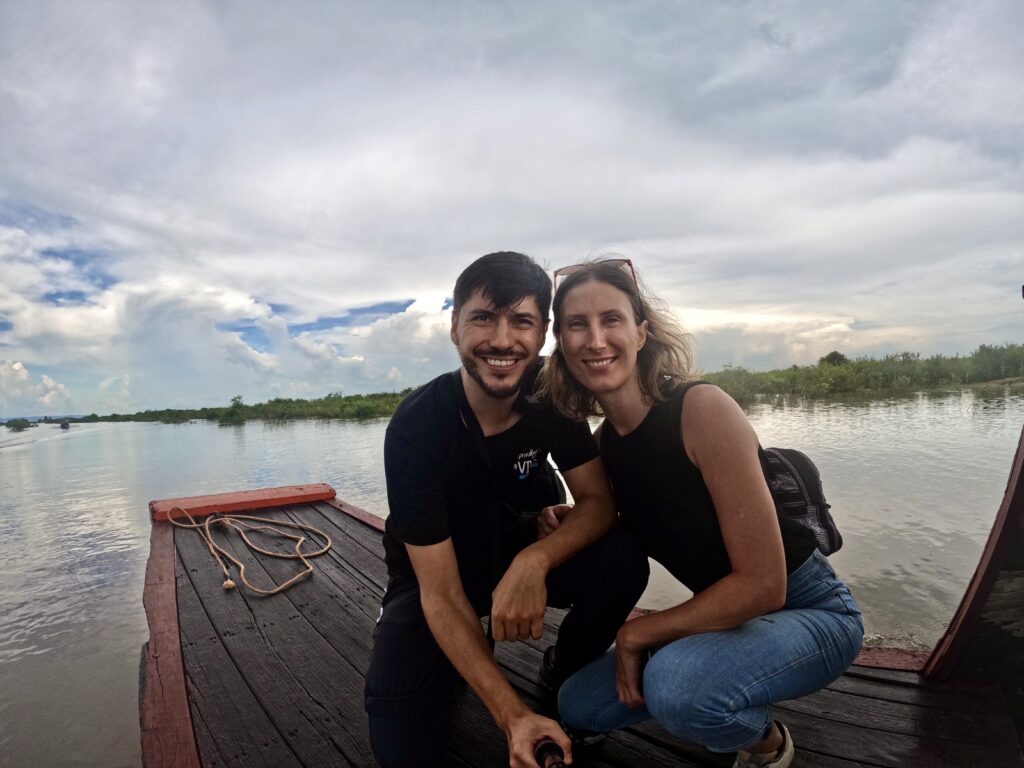
Finding Love Abroad
One of the most rewarding and unique experiences of choosing a life abroad is finding love abroad. The cosmopolitan nature of expat communities means it’s not unlikely the person you fall in love with is from another country. The beauty of finding cross-cultural love lies in discovering more of the world in the other person, about their country, their culture, and in the sharing, you discover more about yourself and your culture too.
If you’ve lived abroad for a while, and have many friends from different countries, it might not feel that unusual to be in a relationship with someone from another culture. Cross-cultural interactions are normalized and become everyday encounters that you hardly notice the uniqueness of this life choice.
There are specific challenges that cross-national relationships pose that no one really talks about. For example, questions around where your home will be in the long-term, if the country you met is a temporary stop for one or both of you.
When Relocation Brings Imbalances and Guilt
When cross-cultural couples (re)locate to one of the partner’s countries, there begins an imbalance. One party that knows the language, the culture, the customs and how things work, while the other must play constant catch-up.
This can develop into a sense of dependency and a loss of independence for the partner new to the country. Disoriented by the move, obstructed by language barriers, even simple tasks become complex. Meanwhile the other partner may end up feeling increasingly responsible for their partner’s well-being.
For the partner who brings their new love to their homeland, sometimes guilt comes along for the ride. Witnessing the shrinking of their partner’s independence, knowing all they sacrificed for them, and seeing all they still have yet to learn. Guilt, for the new challenges they face in their career. Guilt, for bringing them far from family. Guilt, for their partner’s guilt of being far from loved ones.

Choosing Where to Raise Children in a Cross-Cultural Relationship
If the couple choose to have children, the question of where they will raise them comes up. Inherent in the decision to have children in one of the partner’s countries lies a compromise, where one partner will have to compromise more. Raising children closer to one partner’s family, immersed in their language and culture, while being far from the other partner’s.
Grandparents that get to be part of their grandchildren’s childhood, while the other set only get visits. Choosing where to have children is an immensely complex and layered process that is seldom talked about, that cross-cultural couples who want children must eventually face, even years into their relationship.
The Unspoken Emotional Undercurrents
Guilt, loss, identity shifts, one partner the witness, the other the bearer. In cross-cultural relationships, these unspoken forces often run in the background while everyday relationship struggles take place – who does the laundry, how you repair after conflict, communicating boundaries and needs.
Both partners may hold these experiences almost subconsciously as they navigate their new life together, wondering why adjusting is so exhausting. Alongside these deeply held experiences, may be an even deeper knowing – that choosing each other, despite the complexity, is the right choice.
A Therapist’s Perspective
As an Australian counsellor who lives abroad with my Guatemalan partner, I’ve experienced the challenges and struggles of a cross-cultural relationship first hand, and I see these themes come up a lot with my clients. By naming what is often left unspoken, accepting compromise as part of choosing a life together, and navigating the big questions moment by moment, cross-cultural couples can face these additional challenges together.
If you’re in a cross-cultural relationship and identify with these challenges, seeking support from a therapist that “gets it” can help. Counselling for cross-cultural relationships can support you through the transition, give space to all that has to be acknowledged, and a chance to be seen and heard without putting further pressure on the relationship.